Wavefields
Forward modelling: elastic sources, DAS, topography and per-edge free surfaces, visco-acoustic and visco-elastic attenuation, and how solver settings change the wavefield.
-
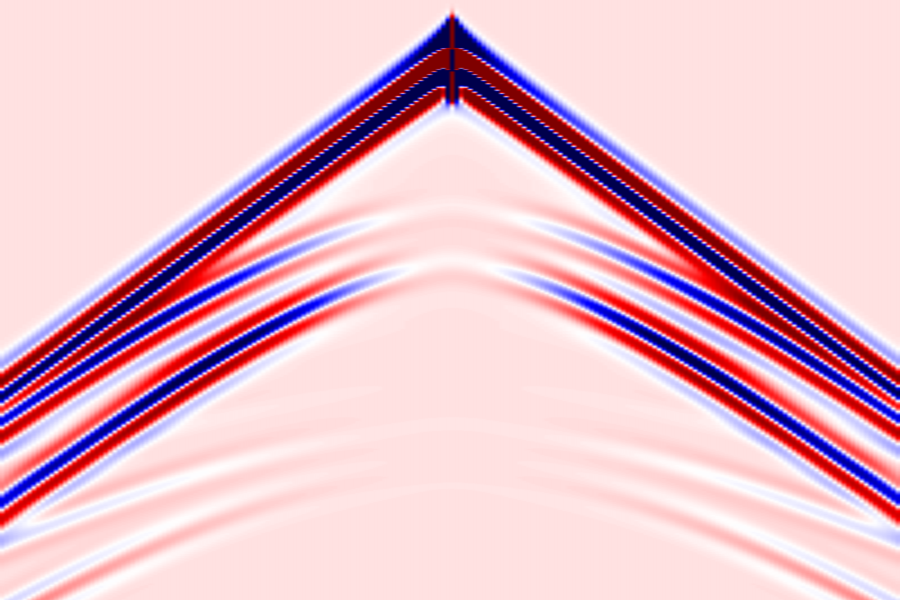
DAS · Zhao vs Mu
Forward-model the same three-layer elastic medium with the two DAS formulations and compare the resulting strain-rate gathers side by side.
-
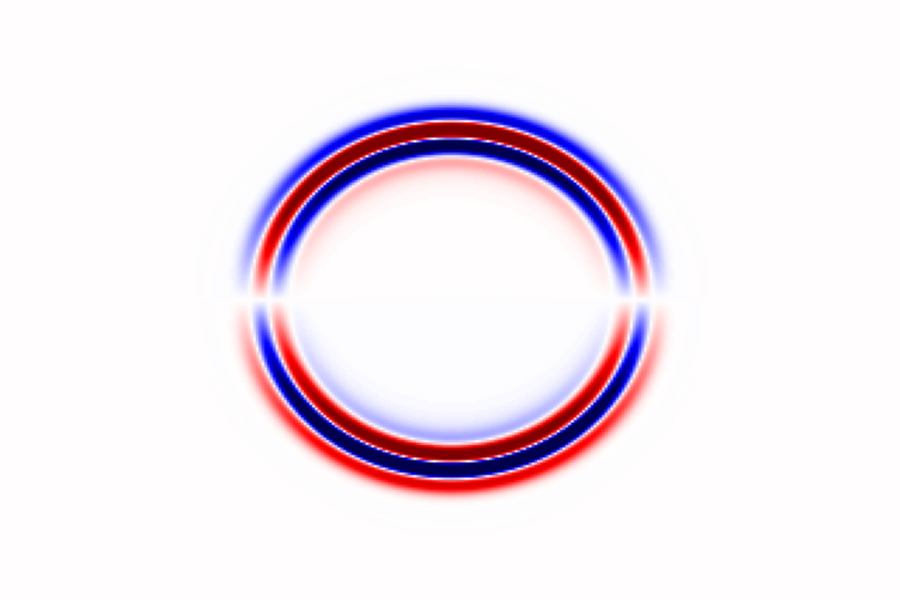
Wavefield · Elastic
Wavefield snapshots from three different stress-source loadings on a uniform elastic medium — explosion, vertical dipole, and pure shear — to visualize P/S excitation and radiation patterns.
-
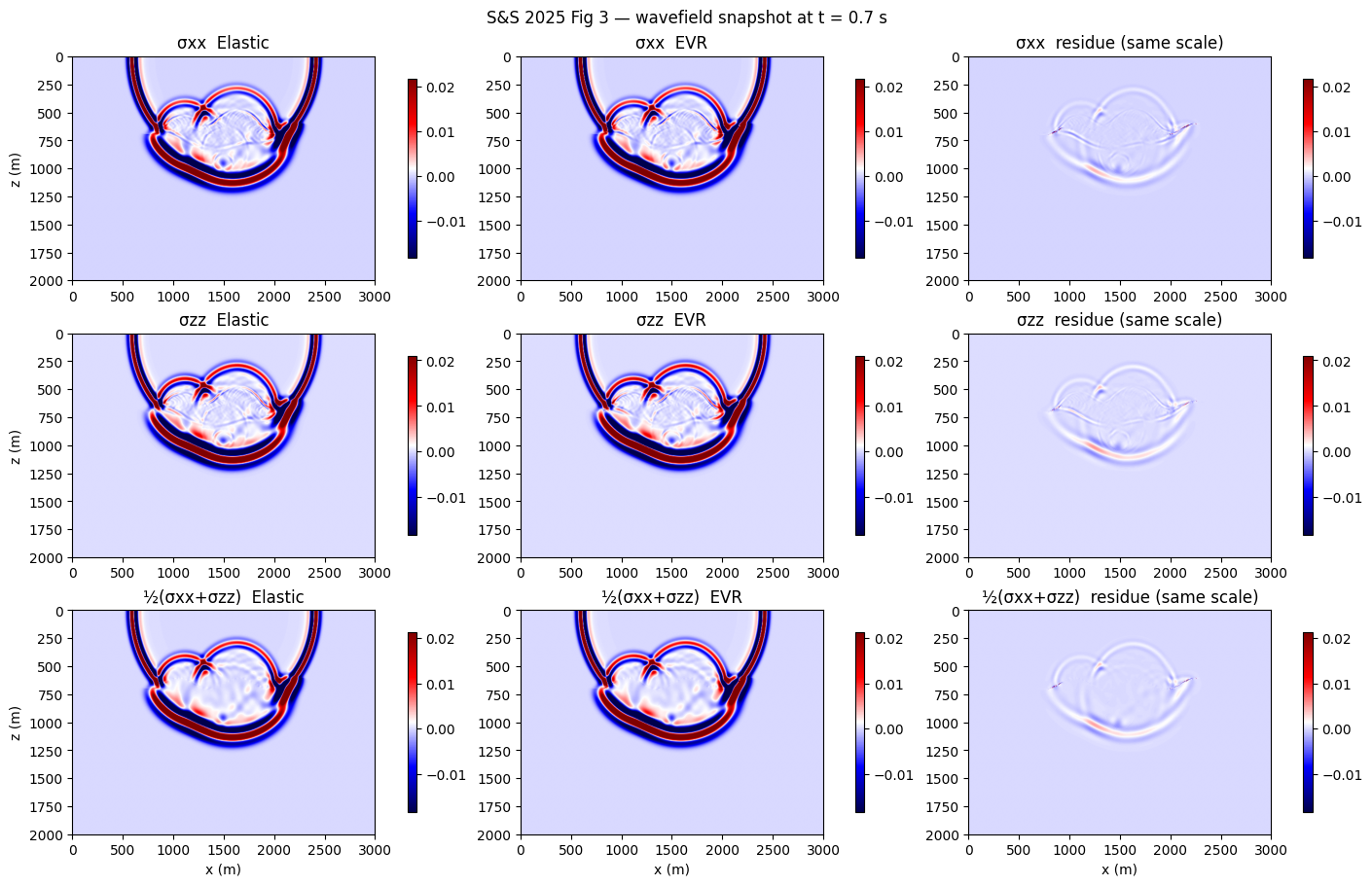
Elastic vector reflectivity
Forward-modeling validation of elastic vector-reflectivity (Soares & Sacchi 2025) — the formulation reproduced and checked against the reference.
-
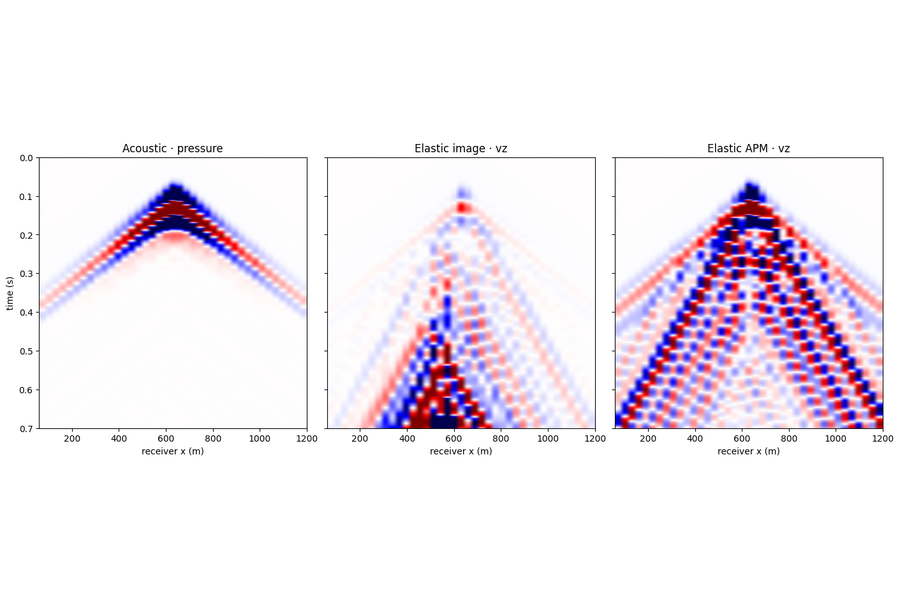
Wavefield · irregular topography
Image-method irregular free-surface for acoustic & elastic 2-D — drape a non-flat surface along the top of the model and see how the topography reshapes the surface waves and primaries.
-
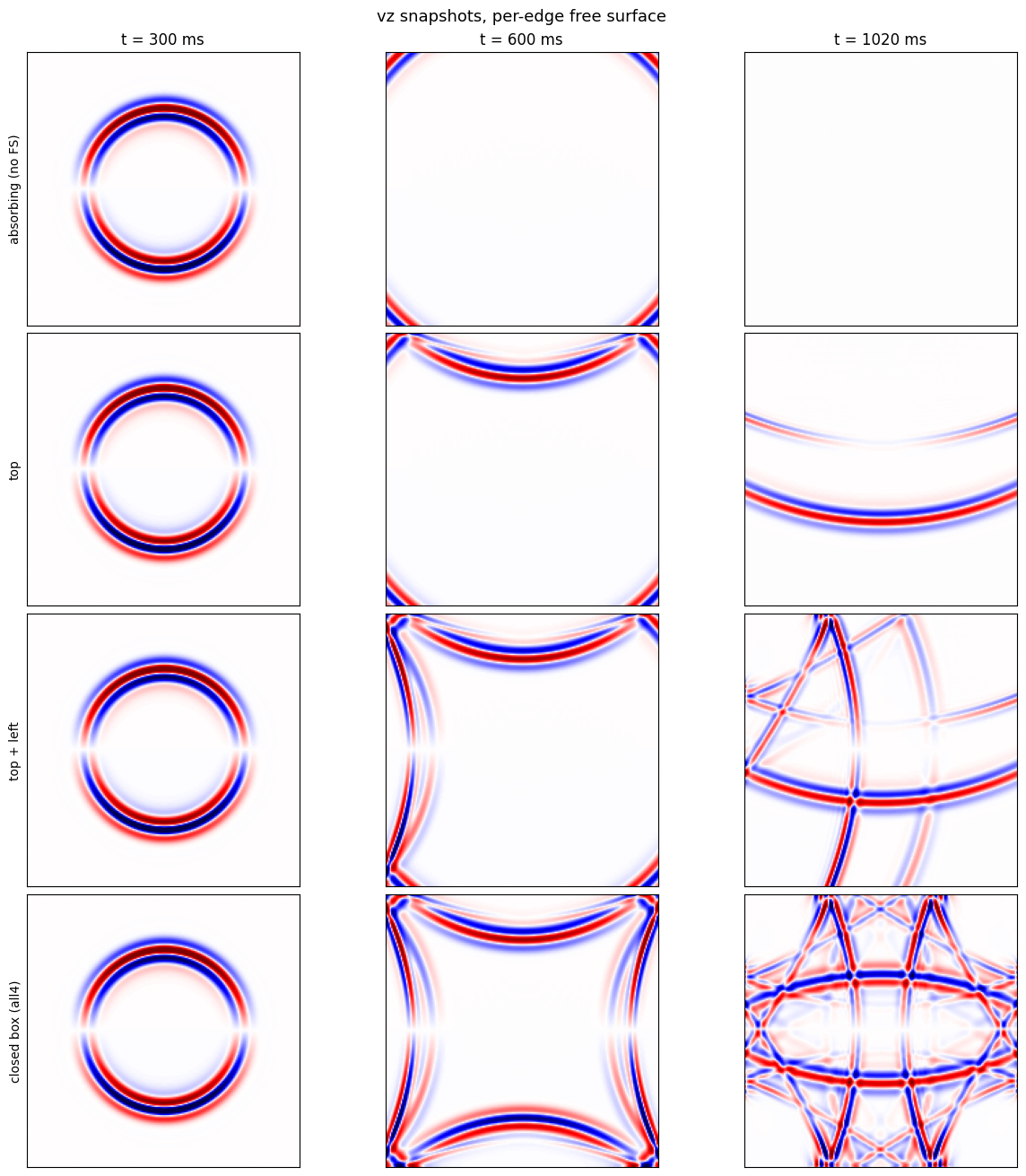
Wavefield · Per-edge free surface
free_surfacetakes a list of faces, not just a bool: free surface on any subset of the four edges — top-only, two-face corners, or a fully closed reverberant box (deepwave-style) — with gradients on every backward memory mode. -
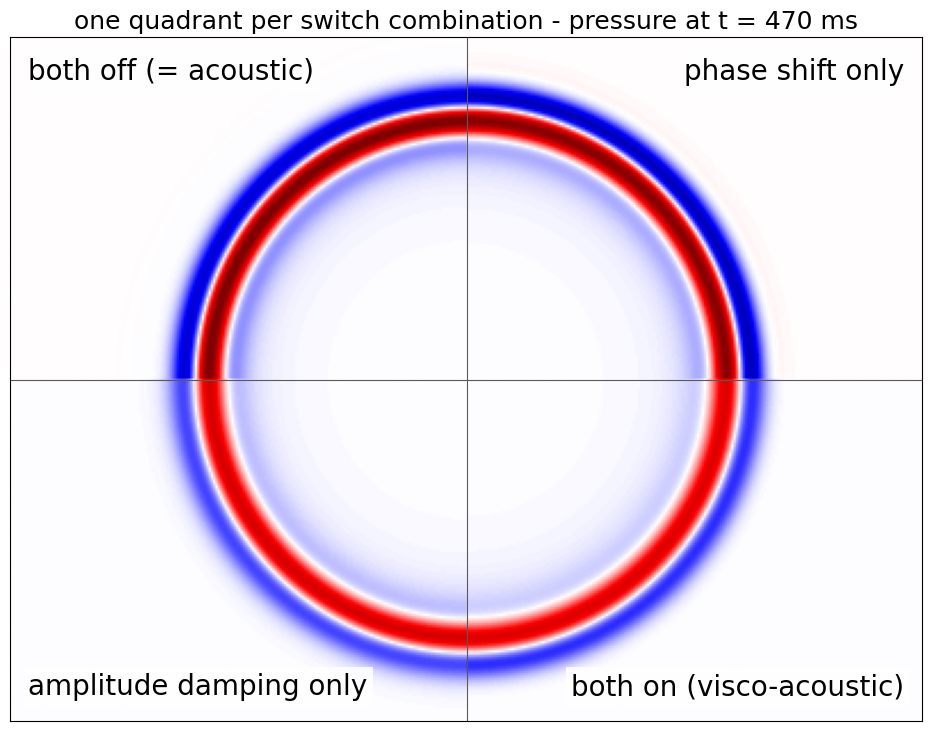
Wavefield · Visco-acoustic · constant-Q
ViscoAcoustic: the acoustic solver plus Zhu & Harris (2014) decoupled attenuation — a dispersion switch that moves the front and a damping switch that decays it, each demonstrated alone, with the measured decay checked against constant-Q theory. -
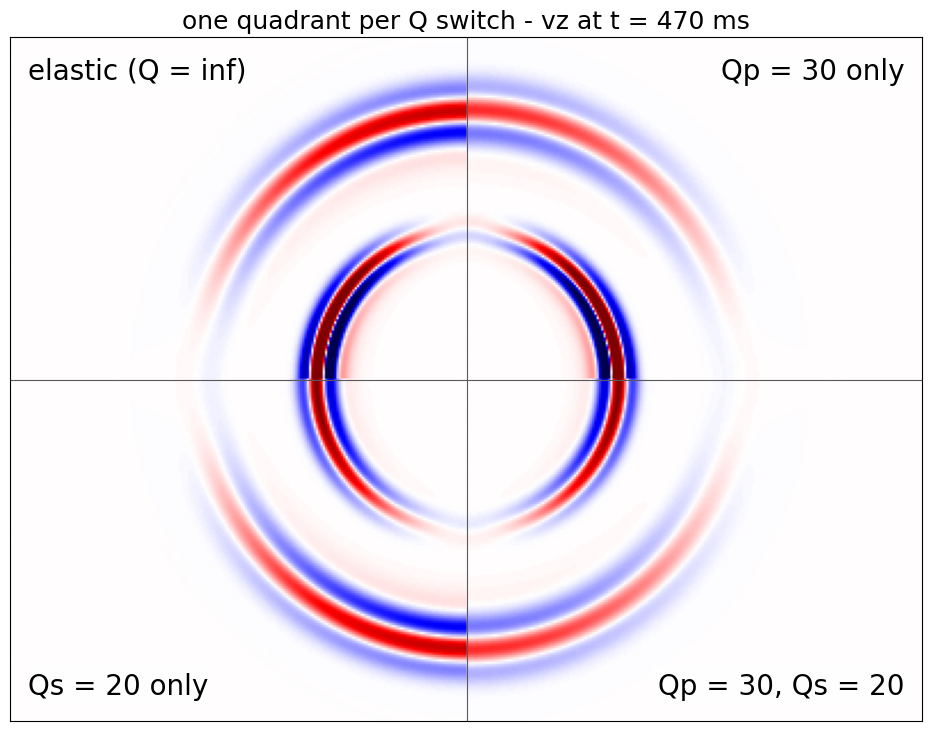
Wavefield · Visco-elastic · GSLS
ViscoElastic: the elastic solver plus the generalized standard linear solid SPECFEM2D uses —QpandQsswitched independently, one quadrant per combination, the P/S decay checked against constant-Q theory, and why dispersion and attenuation cannot be switched apart. -
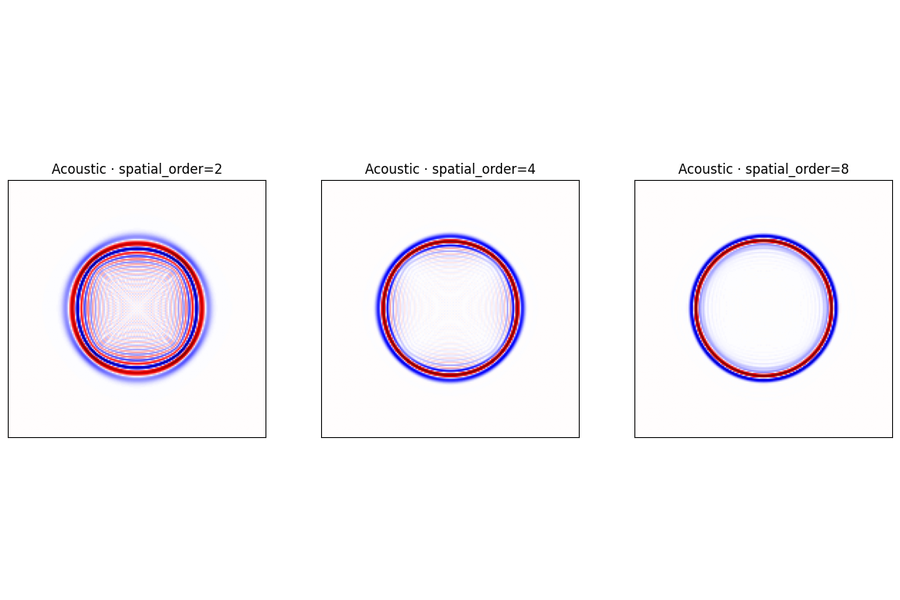
Solver · hyperparameters
Side-by-side wavefield snapshots showing how the propagator's
spatial_order,abcn(PML width) andpml_typechoices visibly change boundary reflections and grid dispersion on a single shot.